
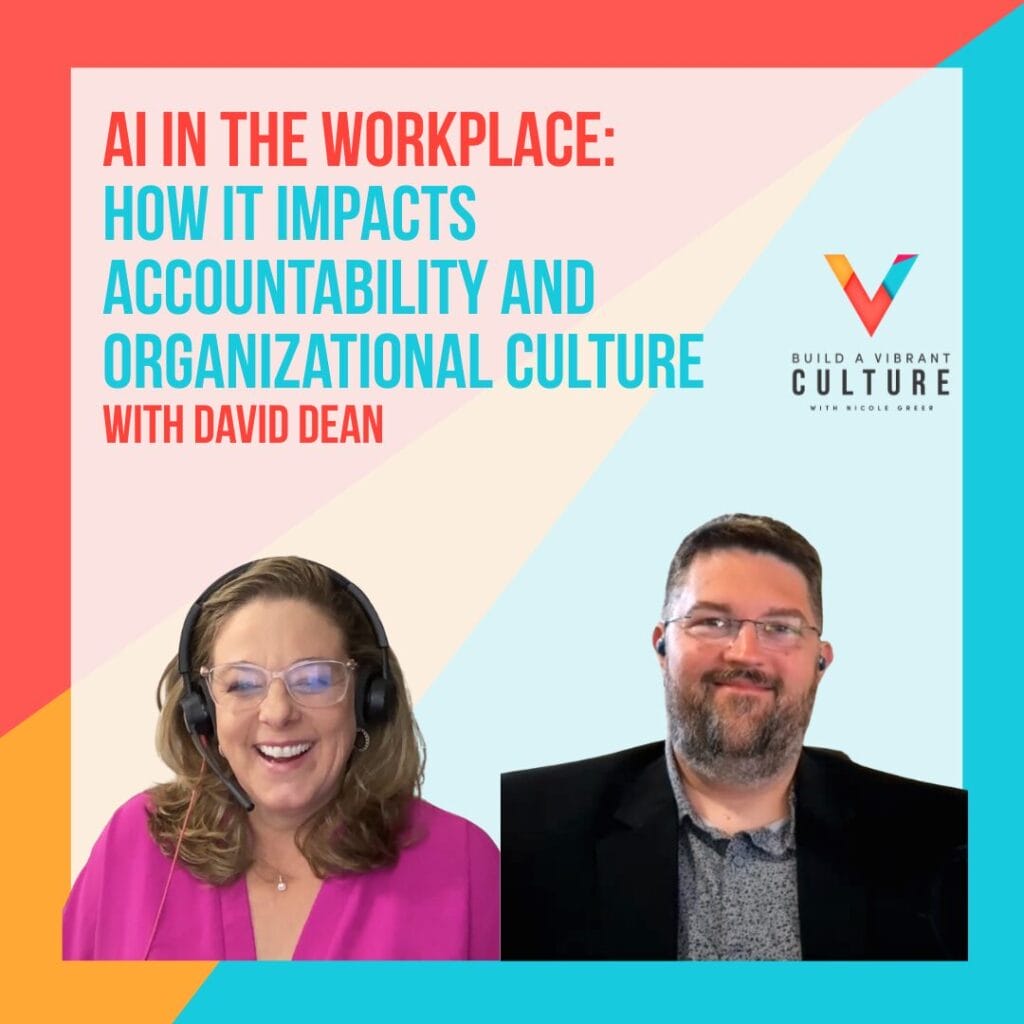
AI in the workplace is no longer a future conversation. It is already reshaping how decisions are made, how accountability is assigned, and how organizational culture functions behind the scenes. On this episode of the Build a Vibrant Culture Podcast, Nicole Greer talks with David Dean, author of “An Inbox Between Us” and a business AI realist who studies the human elements that remain essential even as AI takes on more of our daily work.
The Two Contracts Every Organization Runs On
David opened the conversation with a concept from his book: every organization operates on two contracts. The first is the official contract, comprising company values, standard operating procedures, and job descriptions. The second is the unofficial contract, the unwritten reality of how decisions actually get made, who talks to whom, and what really drives the work forward. That unofficial contract used to live entirely in people’s heads and in water cooler conversations. Now, David explained, it lives in emails, chat messages, and meeting transcripts, which means AI can observe and reflect it back for the first time.
The Inbox Is the Real Workplace
Nicole and David agreed on something every leader already knows intuitively. Employees are told not to start their day by checking email, but almost everyone does anyway, because the inbox has become the real workplace. David pointed out that most official processes have hidden steps surrounding them that never get documented. Someone goes to a colleague, that colleague loops in someone else, and the whole informal process moves the actual work forward. None of that shows up in a job description, but it shows up in behavior, and that behavior is now visible in the data AI can access.
AI In The Workplace: A Companion, Not a Replacement
One of the most useful reframes in the episode was David’s insistence that AI in the workplace is best used as a companion rather than a tool that magically solves cultural problems. He compared it to making a copy of yourself, one that can offload repetitive tasks so people have room to think creatively and make the judgment calls that actually require lived experience. David was direct about messaging here. Leaders who frame AI as a threat to job security create fear instead of adoption. Leaders who frame AI as a way to give people breathing room to do their best thinking build trust instead.
Self-Realization Is the Starting Point
A recurring theme in the conversation was that cultural change occurs only through self-realization. David encourages people to start by narrating their own work, using AI to ask questions about their patterns, their bottlenecks, and their blind spots. Nicole connected this directly to her coaching work, noting that many executives get coached not because they lack skill, but because they have a blind spot they cannot see on their own. AI, used well, can help surface those patterns faster.
Accountability Bottlenecks Are Usually Human, Not Technical
David shared a practical example around approval processes, one of the most common bottlenecks inside organizations. Instead of assuming a tool can fix a stalled approval, he suggests looking at the human dynamics first. Sometimes a person does not feel they have the authority to make a call. Sometimes their calendar is simply too full. AI can help surface these signals, but the fix is almost always a conversation, not a system.
Why This Matters for Building a Vibrant Culture
David’s central point ties directly into the idea of organizational culture as something built from the ground up. Culture is not one big decision. It is thousands of small team dynamics bumping up against each other. AI in the workplace can help individuals and teams see their own patterns more clearly, but it cannot replace the judgment, consequences, and lived experience that people bring to hard decisions. As David put it, AI does not understand risk or consequence, but people do, and that is exactly why people still matter.
If you are navigating how to bring AI into your organization without losing sight of the human side of leadership, this episode offers a grounded, practical approach.
Learn more about David Dean and his book “An Inbox Between Us” at https://www.davidchristopherdean.com/book/
Work With Nicole Greer & Vibrant Culture
Ready to build a more vibrant, accountable culture in your organization? Explore Vibrant Culture’s training catalog: https://vibrantculture.com/catalog-request/

