
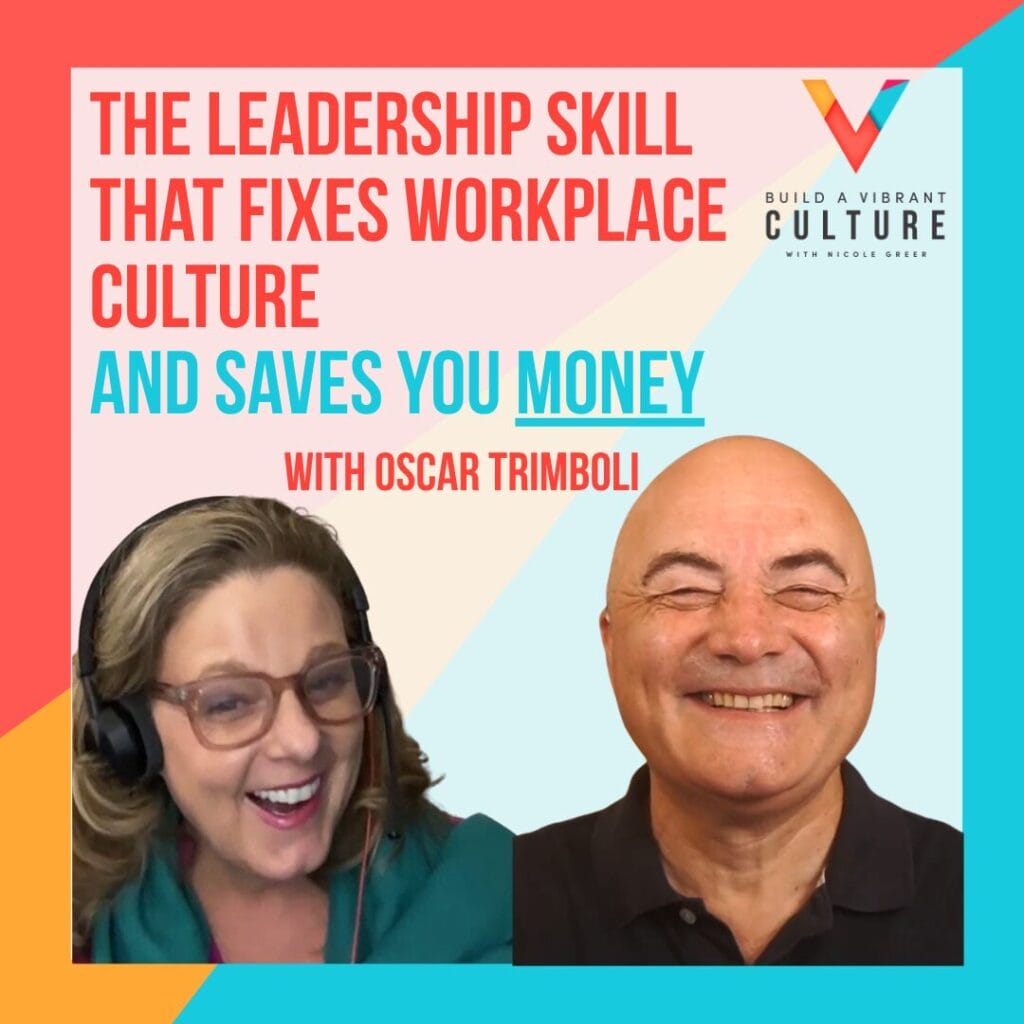
What if there was a leadership skill that fixes workplace culture and saves you money? What if the biggest problem in your workplace isn’t strategy, talent, or execution, but listening? In this episode of the Build a Vibrant Culture Podcast, Nicole Greer sits down with listening expert Oscar Trimboli to uncover why most leaders think they’re listening but aren’t.
And what are the consequences? Miscommunication. Disengagement. Wasted time. Resistance to change.
The good news is that this is fixable and faster than you think.
Why Listening Is a Leadership Skill, Not a Personality Trait?
Most people were never formally taught how to listen.
Instead, we learned through observing parents, teachers, and coaches, which means most of us are operating without structure or intention.
Oscar explains that listening is three things:
- A skill (you can build it)
- A strategy (you can apply it intentionally)
- A practice (you must repeat it consistently)
Yet research shows that 2 out of 3 people aren’t even ready to listen when a conversation begins.
They’re distracted, thinking ahead, and mentally multitasking.
So, before better communication can happen, people need to be present.
The Real Cost of Poor Listening in the Workplace
Poor listening doesn’t just create frustration, it creates real business problems.
Imagine a workplace with:
- Shorter, more productive meetings
- Fewer misunderstandings
- Less rework
- Higher trust
- Better decision-making
That’s what effective listening creates.
And here’s an important key: One well-placed question can save hours of time across a team.
In one example, a single question reduced a 90-minute meeting by 20 minutes for 17 people…20 minutes! How can you use those 20 minutes saved? What if that’s compounded over multiple meetings?
The 5 Levels of Listening And Where Most Leaders Get Stuck
Oscar outlines five levels of listening. Most of us are at level 1.
Level 1: Listening to Yourself
Most people are distracted and mentally overloaded. They’re not listening to others because they’re not even present with themselves.
Level 2: Listening to the Content
This is where people focus on words but interrupt, rush, or react too quickly.
Level 3: Listening to the Context
This includes tone, background, and backstory. Instead of asking rapid-fire questions, try: “How long have you been thinking about this?” That one question changes everything.
Level 4: Listening for What’s Not Said
People speak at about 125 words per minute, but think at about 900 words per minute. That means, you’re only hearing a fraction of what you’re thinking.
The solution for the speaker? Silence. Even one extra second of pause can unlock deeper insight for the listener.
Level 5: Listening for Meaning
This is where great leaders operate. Instead of asking, “What does this mean to me?”, ask, “What does this mean for them?” This is where real transformation and better decisions happen.
Why Employee Feedback Systems Fail and How to Fix Them
Most organizations rely on employee engagement surveys, and most of them fail.
Why do they fail?
Because:
- Employees aren’t involved in creating the questions
- Results aren’t acted upon
- Leaders don’t communicate what will (and won’t) change
This results in apathy.
As Oscar explains, the difference between good and great listening is being explicit about what you will do and what you won’t do. This kind of transparency builds trust.
Simple Ways to Improve Listening Immediately
You don’t need a full training program to get better.
Start with these:
1. Don’t Start Meetings on the Hour
Start 5–10 minutes after to allow people to reset and focus.
2. Ask Better Questions
Try asking this: “What’s the best use of our remaining time?”
3. Create a Listening Container
Set the tone before the conversation starts, calm the room, focus attention, and reduce chaos.
4. Use Silence Strategically
Pause 1 second longer than feels comfortable. You’ll be amazed by what people say next.
5. Focus on Meaning, Not Just Words
Don’t assume someone is wrong. Instead ask, “What do they mean?”
The Truth About Culture Change
“People don’t resist change. They resist not being heard.” If your culture isn’t where you want it to be, it might not be a strategy problem. It might be a listening problem.
Final Thoughts
Listening isn’t passive.
It’s one of the most powerful tools a leader has to:
- Build trust
- Improve communication
- Solve systemic cultural challenges
- Create lasting change
And the best part?
You can start improving it today.
Work With Nicole Greer & Vibrant Culture
Download the Speaker Packet (Book Nicole for your next event):
→ https://vibrantculture.com/speaker-kit-request/
Explore the Training & Coaching Catalog:
→ https://vibrantculture.com/catalog-request/
Connect With Oscar Trimboli
Visit Oscar’s website and learn more about his books, including his latest: How to Listen: Discover the Hidden Key to Better Communication https://www.oscartrimboli.com/how-to-listen

