
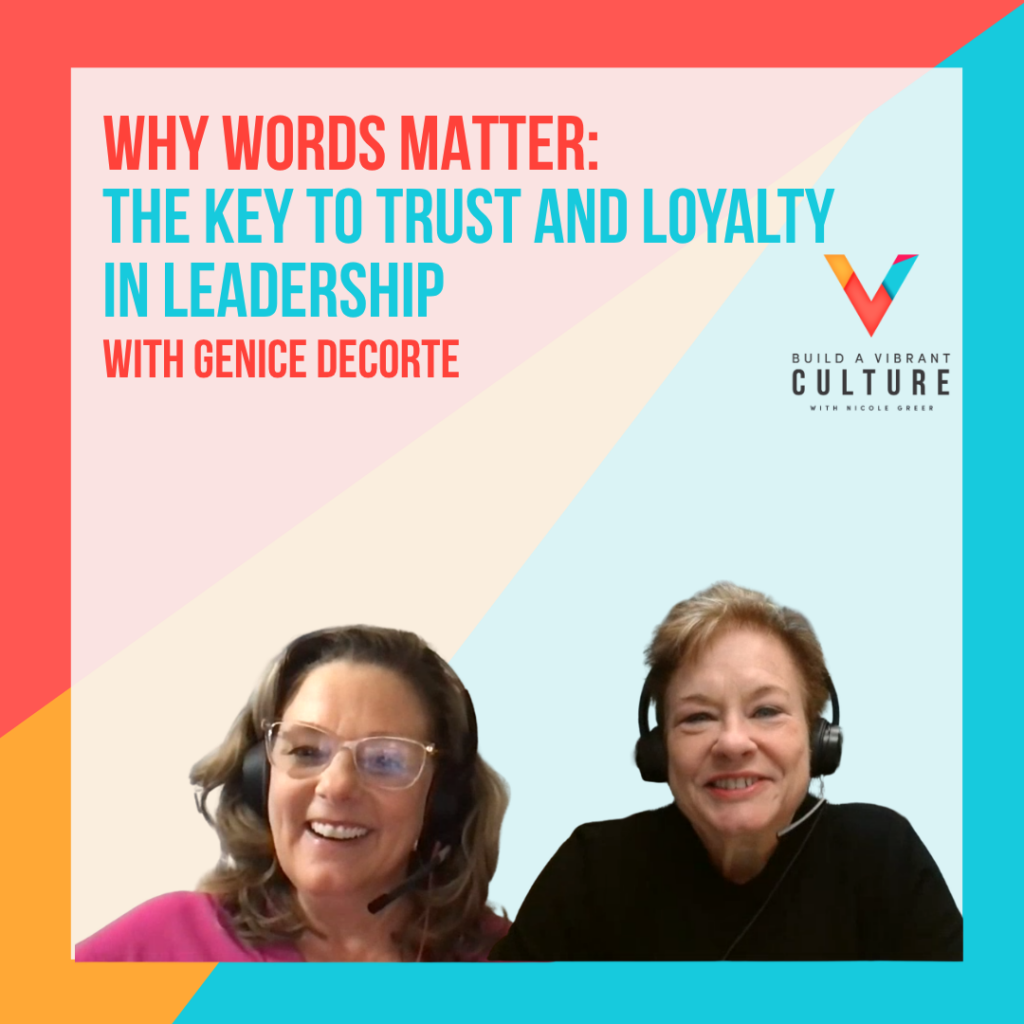
Words matter more than most leaders realize. They can be a quick text before a big presentation or a handwritten thank-you note. A single sentence of encouragement offered today could make a difference to someone 11 years from now. Words are the key to trust and loyalty in leadership.
On this episode of the Build a Vibrant Culture Podcast, Nicole Greer sits down with Genice DeCorte, President and CEO of HealthShare Credit Union in Greensboro, North Carolina, to talk about how intentional communication builds trust, loyalty, and a stronger organizational culture.
Nearly Four Decades in Credit Union Leadership
Genice started working at a credit union at 16 through a high school co-op program. By 31, she was named CEO of a small credit union in South Florida, despite having no background in accounting or finance. Nearly 40 years later, she now leads HealthShare Credit Union and mentors small credit unions across North Carolina and South Carolina.
Her story reminds us that leadership readiness often comes down to tenacity more than a perfect resume. As Nicole put it during the conversation, sometimes you have to take a chance on someone with energy and the drive to figure it out.
Words Matter & People Remember
Genice’s core message, delivered originally as a “TINA talk” (a female-led take on the TED talk format) at a credit union conference, centers on one idea: people may not remember exactly what you said, but they always remember how you made them feel. She shared two stories that prove it. One employee texted her encouragement before a big presentation, a small gesture that meant everything on a nervous morning. Another colleague, someone she had not spoken with in years, recalled specific words of comfort Genice had offered her over a decade earlier after the loss of her spouse.
That is the heart of leadership communication. The words leaders choose, whether in a two-minute text or a difficult conversation, leave an impression that outlasts the moment itself.
WORDS MATTER IN Feedback
Feedback is a place where words matter most. Nicole introduced a simple framework for giving meaningful feedback: Circumstances, Conduct, and Consequences (the C3 feedback method). Describe the situation, name the specific behavior you observed, and explain the impact it had. Genice puts this into practice daily, making sure employees who come to her office don’t assume the worst. She leads with recognition before addressing anything that needs correction, and she believes both positive and constructive feedback should happen quickly, not after a stressful 24-hour wait.
Build Trust With Lunch
One of Genice’s most effective leadership habits is a running series of one-on-one lunches with her employees. She sends discussion questions a month in advance, invites brutally honest feedback about her own leadership, and takes detailed notes. Real changes to lending programs, including an expanded credit rebuild loan, have come directly out of these conversations. The lunches work because her team believes their feedback is actually heard and acted on.
Solving Communication Gaps
Even with a strong culture of feedback, Genice says her top complaint is still inconsistent communication. Her fix was simple: whenever she answers a question for one employee, she summarizes it and shares it with the entire organization. She also sends regular updates about what she is working on, from board meeting highlights to a major vendor conversion, so employees are not left guessing what leadership is doing behind closed doors.
Why Words Matter
Genice and Nicole also discussed the importance of explaining the reasoning behind policies rather than just stating rules. Nicole shared an example from an employee handbook project where adding a short “why this matters to you” note after each policy transformed a legal document into something employees actually connected with. For any organization going through change, whether it is a new vendor or a new expectation, explaining the “what’s in it for me” makes the difference between compliance and buy-in.
The Takeaway
Leadership communication is not about having the perfect words. It is about being consistent, timely, and intentional with the words you do use. Whether it is a quick note of encouragement, structured feedback, or a monthly update on what you are working on, the words you choose shape how your team feels, performs, and stays.
Connect with Genice Decorte
LinkedIn: https://www.linkedin.com/in/genice-decorte-b9808232/
IG: https://www.instagram.com/genicedeco/
Ready to strengthen leadership cOMMUNICATION on your team?
Explore Vibrant Culture’s training catalog or request a speaker kit to bring Nicole Greer’s insights to your next event.

