
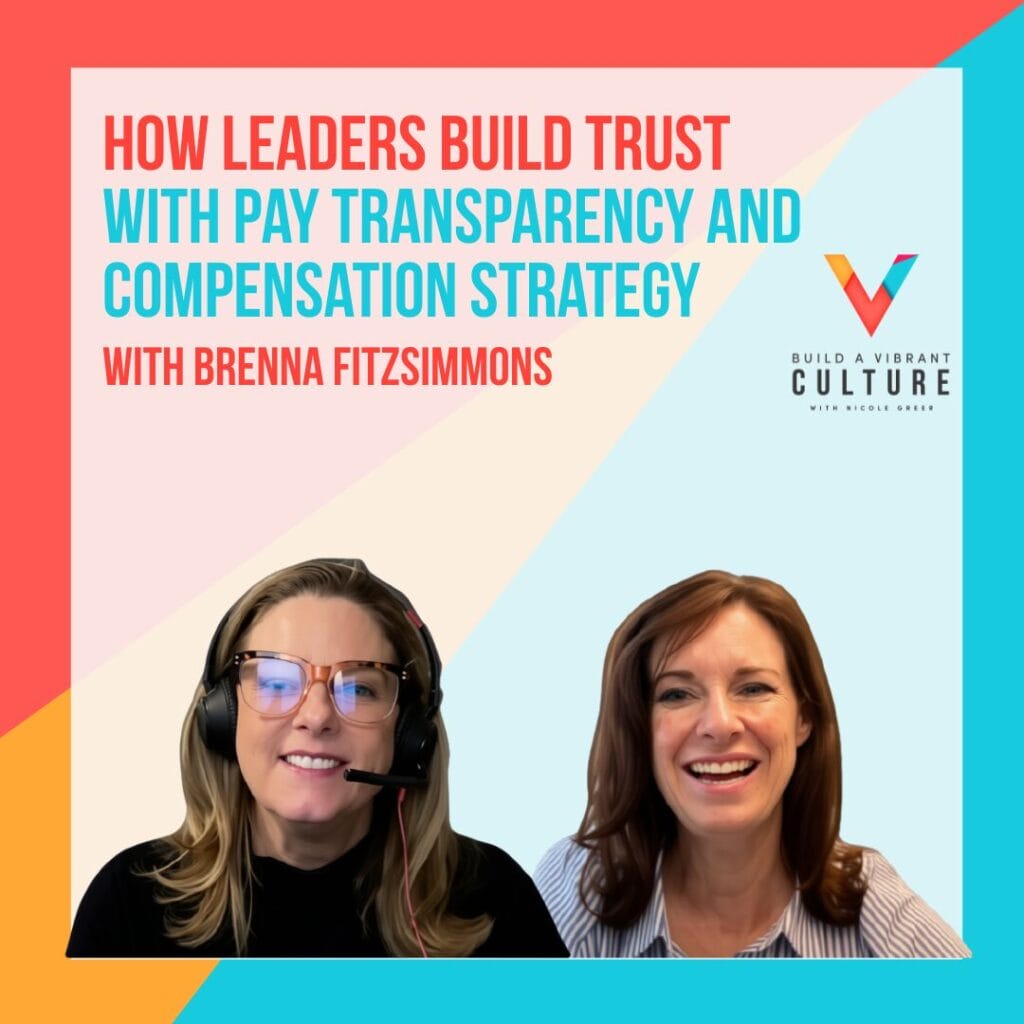
When most people hear “compensation strategy,” they picture spreadsheets, salary surveys, and numbers. But according to Brenna Fitzsimmons, a compensation and HR leader with 18 years of experience, the real work is about people. In this episode of the Build a Vibrant Culture Podcast, host Nicole Greer sits down with Fitzsimmons to unpack why great pay systems still need great leaders, and how compensation strategy connects directly to organizational culture, leadership communication, and employee retention.
Compensation Strategy Is About People
Fitzsimmons spent years as an HR generalist before specializing in compensation strategy, and that background shaped how she sees the work. Compensation touches every part of the employee life cycle, from the job posting through recruitment, promotions, raises, and eventually retirement. At each stage, she says, the real work is communication: explaining pay decisions clearly and coaching managers on how to have those conversations with confidence.
That communication matters because compensation is deeply emotional. People often connect their pay to their identity and status, not just their finances. When a pay decision feels misaligned or unexplained, it can feel personal, even when it isn’t intended that way.
The Biggest Misconception Leaders Have About Pay
One of the most common mistakes leaders make, according to Fitzsimmons, is assuming pay is the only lever that keeps people engaged. She points to research showing that the biggest predictor of whether someone stays with an organization is the quality of their manager, not their salary. Employees are also weighing whether they feel valued, whether they see a path for growth, and whether the organization’s decisions align with their personal values.
That doesn’t mean pay is unimportant. It means leaders who throw money at a retention problem without asking deeper questions are often missing what’s really going on.
Building Structure Creates Equity
When organizations build compensation structures, career ladders, and market ranges, the goal isn’t just administrative tidiness. Fitzsimmons explains that structure creates equity across departments, since leaders in different divisions often can’t see how similar roles are being paid elsewhere. A clear career ladder gives employees visibility into where they stand and what’s available to them, which supports both retention and internal mobility.
Pay Transparency Is Coming, and Leaders Need to Be Ready
Salary transparency laws are expanding across states, and Fitzsimmons sees this as a positive shift toward closing pay gaps and building fairness. But she cautions that transparency only works if leaders first understand their own organization’s compensation philosophy. Every organization has one, whether it’s written down or not, and it’s often different from company to company. Leaders who can’t articulate that philosophy will struggle to explain it to their teams.
Preparing Managers for the Hard Conversations
Not every compensation conversation ends the way an employee hopes. Fitzsimmons’s advice for managers delivering difficult news: create a safe space, communicate with clarity, and don’t avoid the conversation. When leaders stay silent or vague about the reasoning behind a decision, employees tend to fill in the gaps with their own assumptions, which are often worse than the truth.
She also credits her background as a coach with transforming how she approaches this work. Coaching, she says, is fundamentally about asking the right questions to uncover what’s really behind a concern, whether that’s a budget constraint, a misunderstanding, or an old wound from a previous employer.
Using AI as a Tool, Not a Decision-Maker
On the topic of artificial intelligence, Fitzsimmons offers a practical guardrail: use AI to support compensation work, such as drafting job descriptions or generating ideas, but never as the final decision-maker. If you can’t validate what the tool is producing, you shouldn’t be relying on it to make people decisions.
The Takeaway
Great compensation systems are built on structure, transparency, and communication, but they only work when leaders bring empathy and clarity to the conversation. As Fitzsimmons puts it, when organizations handle pay fairly and communicate openly, employees understand the outcome even when they don’t love it.
CONNECT WITH BRENNA FITZSIMMONS
You can connect with Brenna Fitzsimmons on LinkedIn here: https://www.linkedin.com/in/brennafitzsimmons/
OTHER COMPENSATION STRATEGY DISCUSSIONS
In addition to Fitzsimmons, we’ve had Scott Trumpolt discuss compensation strategy. If you missed it, check it out.
Start Building Your Own Vibrant Culture
Want to bring this kind of leadership training to your organization? Explore Nicole’s training and coaching catalog or download the speaker kit to book her for your next event.

